Laugharne Sunday, 13 March 2022
12 people assembled in the Car Park by Laugharne Castle on Sunday morning . It was wet and cold and we put on a lot of layers. We established that high tide would be mid-afternoon while we were still likely to be walking, but the maximum height that day would be 4 metres not 6, so no danger of flooding the car park.
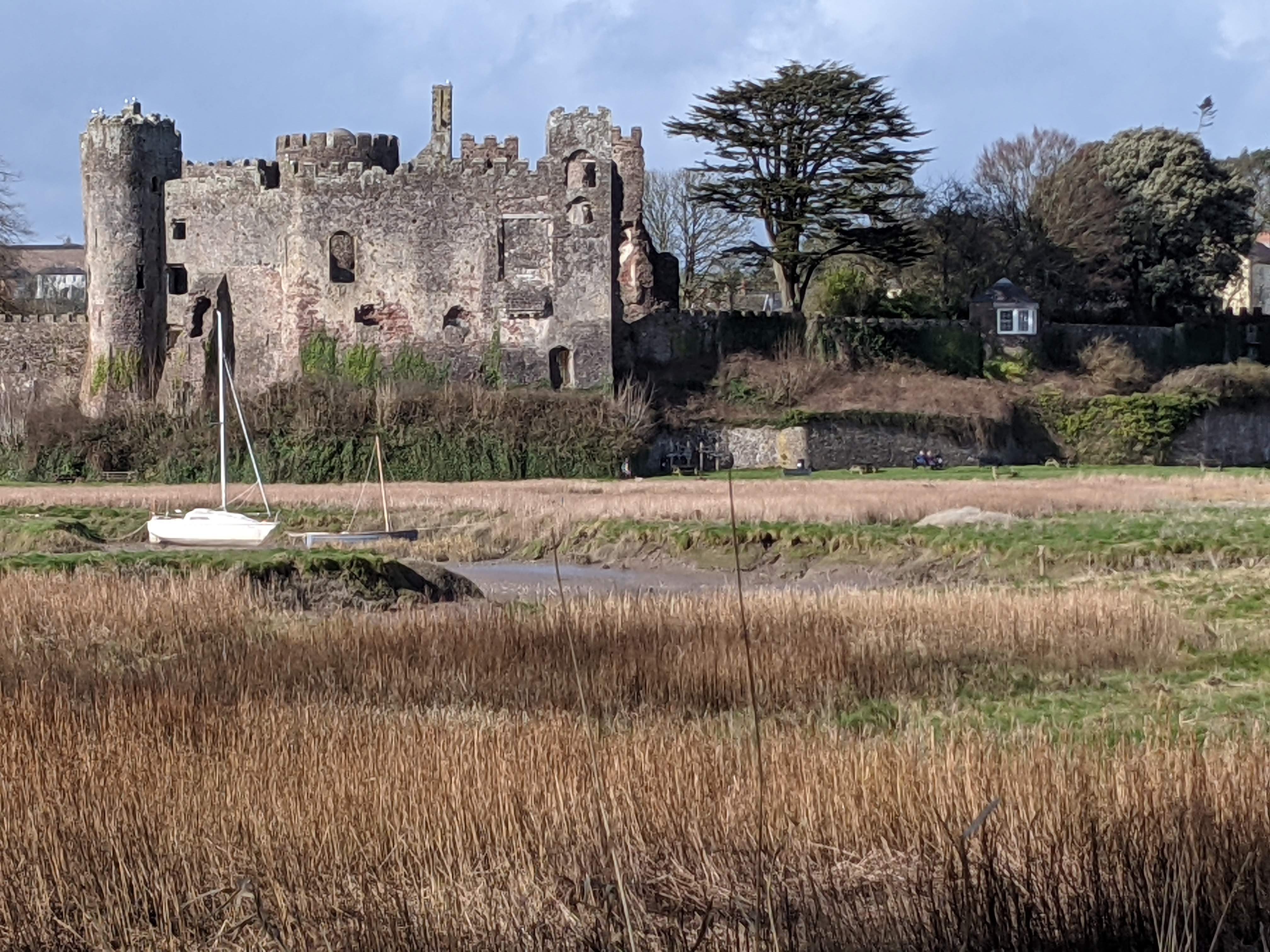
Despite being well-located at a river mouth, it seems that Laugharne Castle barely existed as a useful fortification. Shortly after the stone version was built in mid-1200, it was wrecked by Llwellyn ap Gryffudd, defending Wales from the conquering English. In Queen Elizabeth’s time it was restored and converted to more of a mansion by Sir John Perry , who later died in the Tower of London. Oliver Cromwell finally finished it off, and what remains are tall walls and empty windows, but it looks good.
We walked along the well-made path enjoying being at sea level, but had to scramble over rocks to reach the bottom of steps up the cliff. On the recce they had been easy to cross, but this time were slippery with rain and algae on the seaward side. Best route was on the red sandstone near the cliff (or the alternative path!).
The steep steps came out by Dylan Thomas writing shed, and continued more or less levelly on a soft wooded path for a while. Unbelievably after such a wet start, the sky turned blue and stayed blue all day.
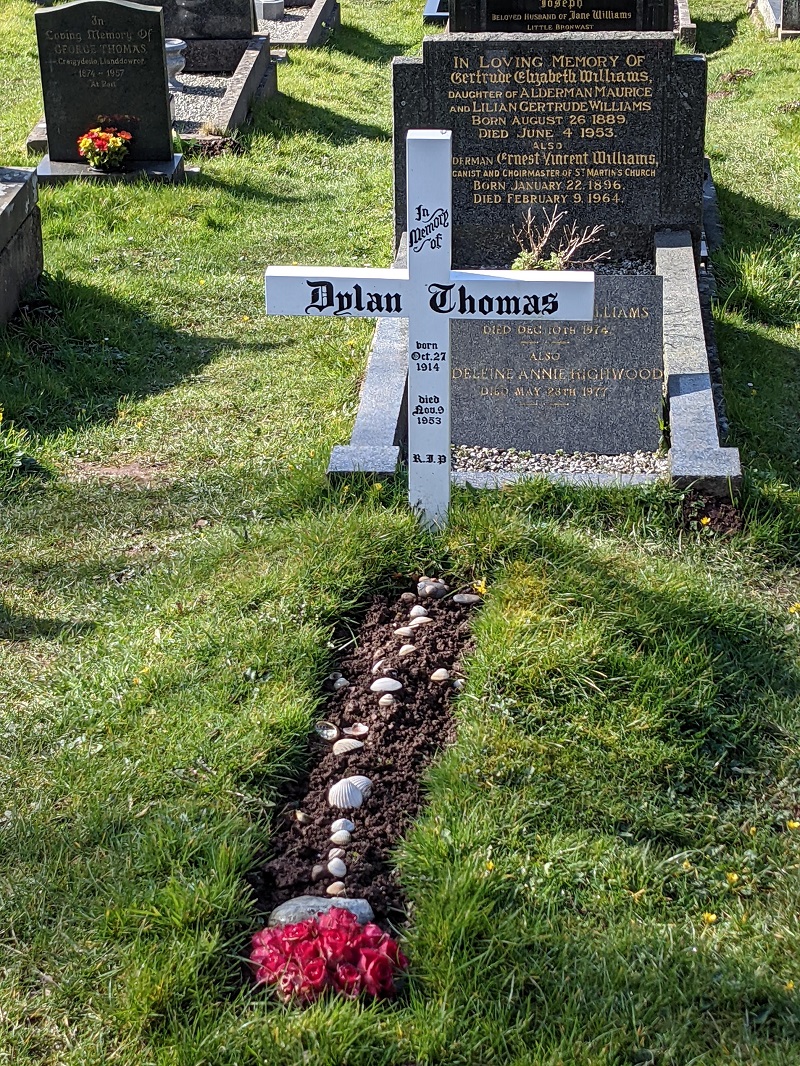
The path turned inland, we crested a ridge and descended to St Martin’s Church for coffee, finding a sunny bank to lounge against in the newer burial ground where Dylan Thomas is buried with his wife Caitlin. There is a useful large cheap car park below the church.
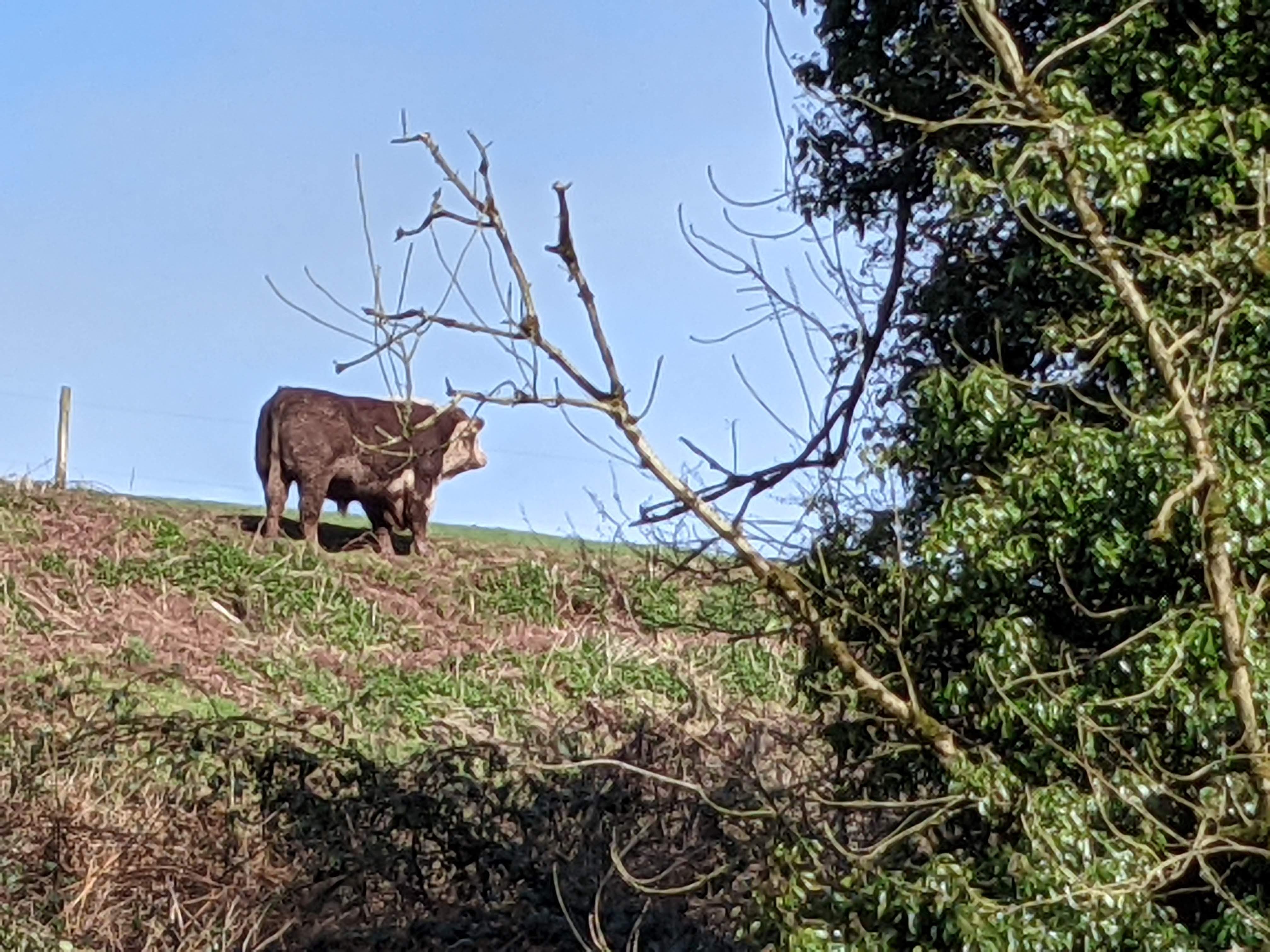
Continuing anti-clockwise round the outskirts of Laugharne, through small streets and paddocks, alongside an attractive stream, we emerged on to a green hill Branching off to the right, we toiled up through a field or two and circled round, heading for the small village of Llansadwrnen, on the way passing rather close to a large but mainly placid bull separated from us only by the thin wire of an electric fence. All was well and we reached a church car park with a friendly vicar and plenty of space for lunch, soaking up the sun and pleased with the extensive view.
After lunch it was downhill to sea level. Coygan cave in the quarry there was found to hold Neolithic stone tools (50-64,000 years ago), followed by an occupation of Hyenas during the ice age (12,000 years ago), then hunter gatherers (up to 6000 years ago). A hill fort was built there by iron age people, then occupied by Romans and others into the early middle ages. Must have been the view !
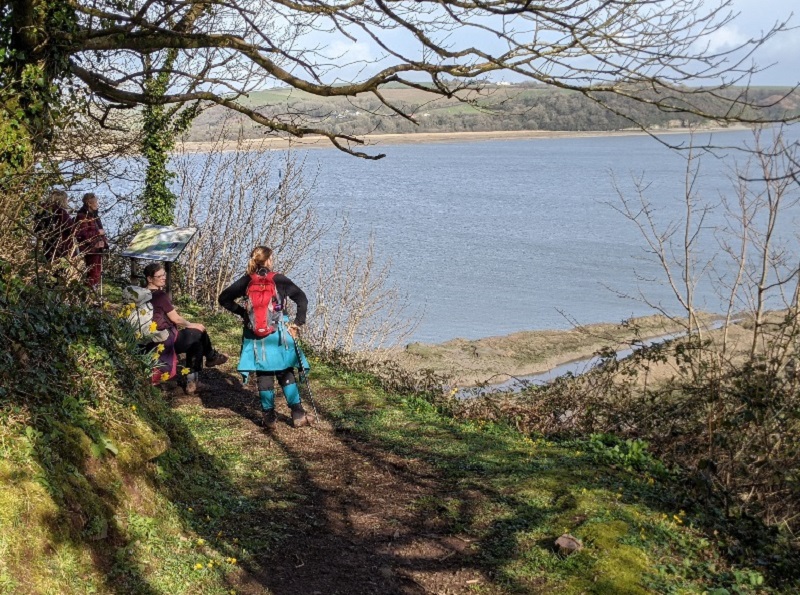
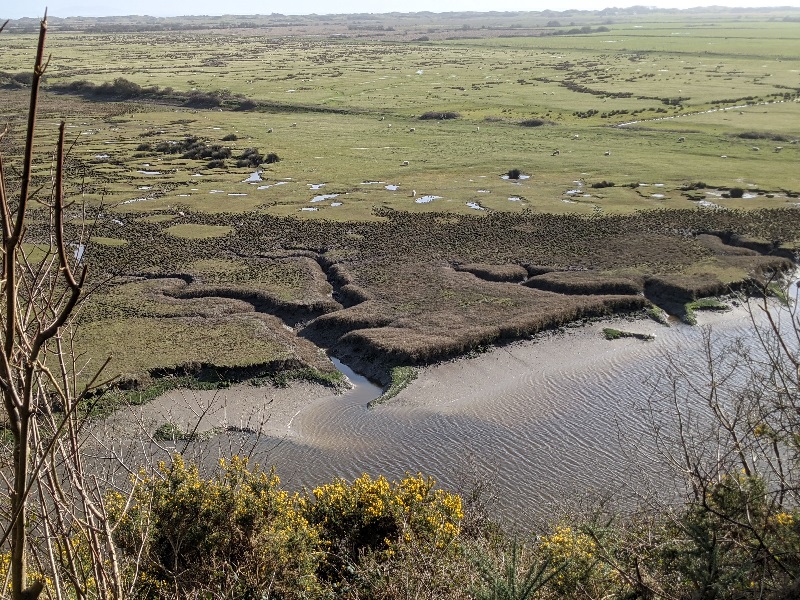
A very good track led along between the cliff base and the reclaimed salt marsh, and just as we were expecting to saunter easily home, admiring sheep and egrets, the path struck steeply upwards once more to some groaning, and became Dylan’s Birthday Walk. A recent name for an ancient track round the bluff, we assumed, but with nice new benches, gorgeous outlook, and an easy descent back to the carpark.
One pub was open , but looked a bit shaded, so we stayed outside in the sun and ate ice cream .”